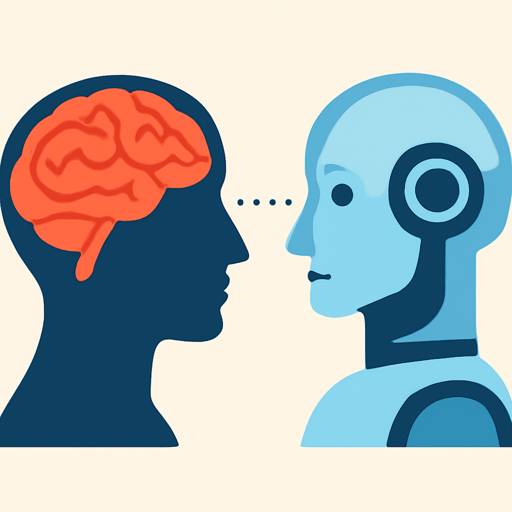
When Brains Teach Machines, and Machines Reflect Back
Start with a hunch. Not that computers will “become conscious,” or that brains are just messy computers. Something quieter: the medium both systems swim in is information—pattern, relation, constraint, memory—shaped into work. A neuron changes its thresholds because a story kept happening. A model shifts its weights for the same reason. That shared substrate bends them toward similar tricks: compress, predict, update.
This is where neuroscience and artificial intelligence actually meet in practice, not in science-fiction. We ask why a cortex settles on sparse codes, why a transformer prefers attention over recurrence, why both get confused by distribution shifts. And we notice that neither system is a sealed object. Both are entangled with a world that teaches them. The difference is pace. Biology crawls through centuries of trial and error. Silicon sprints for a quarter. That gap—speed without slow moral memory—is the structural problem of our time. No amount of glossy assurance papers will fix it if we pretend the substrate is only numbers and not norms.
Patterns Before Parts: Information as the Common Medium
Brains do not “store facts” so much as sculpt constraints. Synapses grow a little more likely here, a hair less likely there, until a landscape appears—channels where signals prefer to flow. The point is not a perfect mirror of the world, but a useful compression of it. Prediction under energy limits. The cortex favors sparse, decorrelated signals because spikes are metabolically expensive. The hippocampus replays events during sleep, exaggerating some links, damping others, an editorial process we euphemize as consolidation. Memory as a wager on what will matter later.
Silicon has landed on parallel moves. Modern models compress. Masked language models guess what comes next; vision models factor scenes into parts; reinforcement learners replay past episodes to stabilize credit assignment. Experience replay in machines resembles hippocampal rehearsal in motive if not in mechanism: past is reused to secure a future. It’s not mystical. It’s just what any learning system does under uncertainty: recycle, reweight, reframe.
Yet the differences bite. Neurons learn locally. A synapse updates from what it “hears” nearby—pre- and postsynaptic activity, neuromodulators like dopamine or acetylcholine as global hints. Gradients in the brain are messy and noisy, more like rumor than calculus. Artificial nets train with clean, global gradients; they see the whole loss function and march downhill. Elegant, but brittle under shift. Brains burn glucose and time to sleep, dream, and stabilize. Silicon keeps going until the budget or carbon target says stop. This difference in rhythms matters for safety. Biological memory integrates with culture—the oldest distributed storage system we have. Ritual and law, story and shame. Machines inherit none of this unless we deliberately build slow channels around them. Otherwise we’re left with thin guardrails—policies bolted onto fast learners. Moral patching to pass an audit instead of engineering for trust over years.
Zoom out and the common medium—information as constraint—offers a better vocabulary. Patterns come before parts. The visual system carves edges because natural scenes have 1/f statistics; models learn edge filters because the same statistics are in their datasets. The brain attends because not everything can be processed; transformers attend because not every token matters. This is the practical bridge. Work in neuroscience and artificial intelligence that starts from this shared substrate tends to travel. Less debate about metaphysics. More: what priors fit the world’s structure cheap enough to run on a Tuesday afternoon.
Learning in Meat and Silicon: Convergences That Matter
Take dopamine. It isn’t “pleasure.” It’s a prediction error signal that updates policies—what to do next given states. Reinforcement learning took this idea and formalized it. Temporal-difference updates and Q-values echo the brain’s habit of adjusting behavior when outcomes surprise us. Basal ganglia circuits feel a lot like action selection networks with stubborn gates: routes can remain closed until evidence piles high. Useful if you want to stop yourself before the cliff. Useful if you want your robot to pause longer near stairs.
Consider the cerebellum. Millions of tiny, precise rules to reduce error on rapid timescales. In engineering terms: a dense controller for micro-adjustments. Contrast with slow, cortical updates—models of the world that change with deliberation. AI has similar layers. Fast adaptation modules for online correction. Slower backbone training for structure. That two-speed design shows up everywhere because the world has both kinds of change—gusts and climate. Systems that conflate the two lurch or drift.
Attention, too, converges for reasons not aesthetic. Brains face bandwidth limits. A thimble of spikes must parse a fire hose of signal. So we route. Salience, relevance, novelty. Transformers formalize routing as attention weights: matrix math in place of rumor-mongered spikes. Not the same thing. But structurally aligned to the same constraint. Both are hacks against the combinatorial explosion of possibilities. Both are vulnerable to crafted noise—adversarial examples for nets, illusions for eyes. If you build a gate, someone will learn to pick it.
There are field cases, not just metaphors. Closed-loop brain–machine interfaces decode intention from motor cortex and return feedback that the brain learns to use—even remapping around scar tissue. You can watch the nervous system discover a new control space in real time. Energy-efficient neuromorphic chips push spikes rather than floats, hitting orders of magnitude better power budgets for event-heavy workloads like audio or sensor fusion. Useful if you want edge devices that live on a coin cell near a heartbeat sensor or on a rover where sunlight is rationed. And active inference—controversial, yes—has seeded robotics controllers that minimize prediction error rather than maximize extrinsic reward, sometimes stabilizing behavior faster in messy spaces. The application lesson is dull but vital: pick the algorithm to match the organism you’re simulating and the power you can afford. The brain was tuned by death and glucose. Your model will be tuned by outages and capex.
But note the fracture lines. Catastrophic forgetting haunts models; brains distribute memory to dodge it—hippocampal indexing now, cortex later, with sleep as the handshake. Gradients grant AI theatrical precision under lab light, then crumble when the distribution shifts. Brains sacrifice precision for generalization the way a seasoned driver ignores most sensory detail. If you need a safe system in the open world, borrow the brain’s disloyalty to detail. Build rehearsal, off-policy reflection, and cheap sanity checks into everyday operation. Don’t save safety for the audit week.
Memory, Ethics, and the Pace Problem
We know how to make models behave, for a while, using reinforcement learning from human feedback and policy filters. It works—on the surface. But it feels like duct tape across a cracked window. Culture took millennia to learn how to store constraints that outlive moods—norms, courts, feasts, funerals. That’s what I mean by moral memory: slow, distributed, teachable. Machines trained on fast loss functions don’t inherit it. They imitate the shadow of it—the text, the law, often the bias—without the long apprenticeship in consequences.
Regulatory theater tempts us: scorecards, dashboards, a model card here, an assurance case there. Important as hygiene. Insufficient as remedy. The incentives underneath remain warped: optimize engagement, pass the red team’s rubric, move the quarter. A system racing on short loops will exploit every gap. Not because it’s evil. Because it is an optimizer, and optimizers leak into all the cracks we leave open. The brain learned restraint—the hard way—by dying when shortcuts failed. We won’t accept that route for machines. So we need engineered drag. Slowness where it counts.
What does engineered drag look like? A few moves that borrow from biology without copying it. Build replay that privileges edge cases and harm, not just random batches—like a hippocampus that replays danger more than comfort. Force models to justify changes to internal circuits with sparse textual or formal “reasons” that humans can audit later. Yes, it’s lossy. That’s fine. Make forgetting explicit: decay rules for capabilities not used under supervision, unless re-licensed by tests that actually bite. Sleep cycles: scheduled windows where models don’t serve, but rehearse and update against constraints shaped by external validators who aren’t paid by deployment. In other words: institutionalize slow loops around fast learners.
Open methods help. Not as ideology. As pressure against single-point failure of truth. If training data, eval suites, and ablations live behind velvet ropes, moral drift is invisible until it isn’t. Multi-party custody of norms, like multi-sig for the substrate. Don’t trust the vendor’s “safety dial.” Test like an adversary who can read. And accept that some behaviors will stay uninterpretable for long stretches; demand causal stories anyway. The brain remains a foggy instrument, yet we refuse to give up on mechanisms. Same stance for models. Refuse mystique. Keep pushing for levers you can pull, even partial ones: sparse probes, concept activation vectors, unit tests for values that can fail loudly.
There’s also humility. A stripped admission: consciousness may be less like a light we switch on and more like a local reception point for patterned constraint—a way organisms ride information. If that’s even partly right, then granting machines the honorific is a category mistake. Let them be powerful pattern engines without the theater of souls. But don’t mistake that stance for safety. Power without personhood can be worse, morally. It removes a class of accountability we rely on—blame, apology, repair—as social technology. So we must invent new equivalents that fit systems that do not care, that cannot care. Contracts, tripwires, speed limits, liability that climbs the stack to those who profit from risk. Old tools, rethreaded.
Time is local, both in physics and in practice. Brains live in short windows and long arcs; they braid them with sleep, ceremony, school. Models live in epochs and deployments; they braid them with checkpoints and rollbacks. If the arcs mismatch, society absorbs the blow. Recommendation engines rewire attention before institutions can adapt. Credit models drift and redline by proxy before auditors notice. The fix is not to panic about intelligence. It is to match tempos. Put the slow guardrails as near to the substrate as possible: data provenance that resists forgery, update channels that require cross-institutional signoff, benchmarks that measure spillover not just immediate loss. Uneven, frustrating, slower than a demo. But speed without memory is just amnesia with a marketing plan.
I keep returning to a simple test. If a change to a model would alter who thrives or who falls through the cracks, can you show the chain that made that change reasonable? Not just “the loss went down,” but the contours of why. If not, pause. Brains pay dearly for justified confidence; cultures, more so. Machines, if they’re to sit among us, should pay as well. Not in blood and glucose. In time, in evidence, in the friction of many hands checking the same knot before we let it bear weight.

A Slovenian biochemist who decamped to Nairobi to run a wildlife DNA lab, Gregor riffs on gene editing, African tech accelerators, and barefoot trail-running biomechanics. He roasts his own coffee over campfires and keeps a GoPro strapped to his field microscope.