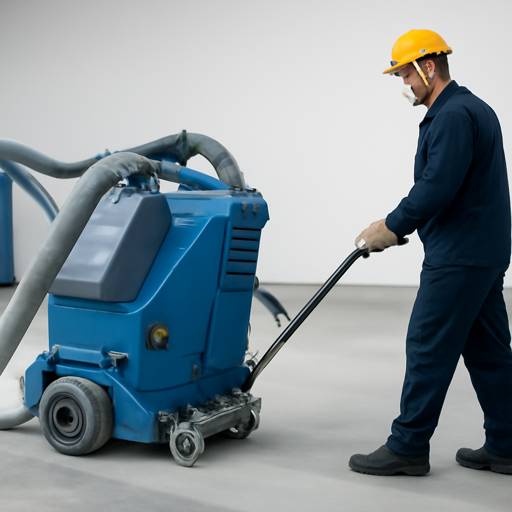
Captive Shot Blasting: Dust‑Free Power for Industrial Floor Preparation
What is Captive Shot Blasting and How Does It Work?
Captive shot blasting is a closed-circuit, dust-free method of surface preparation that propels steel abrasive against a substrate and instantly recovers both the media and debris. Unlike open blasting that leaves airborne dust and loose grit, the machine’s integrated vacuum and separator collect contaminants at the source. The result is a controlled, consistent profile that delivers a clean, roughened surface—often called a mechanical key—ready to accept new coatings, screeds, and overlays. For concrete floors, asphalt decks, and even steel plate, the process removes laitance, weak surface layers, and embedded residues while preserving the structural integrity of the slab.
The science is simple but effective: steel shot is accelerated by a blast wheel and impacts the floor at high velocity. Kinetic energy fractures weak surface material and creates microscopic peaks and valleys. Spent shot and dust are recaptured, separated, and the reusable media is cycled back through. Operators adjust travel speed, shot size, and machine amperage to fine-tune the profile, from light keying for thin-film resins to deeper textures for heavy-duty epoxy or polyurethane screeds. Because there is no water involved, the process is fast, clean, and leaves the slab in a dry, bond-friendly state.
For industrial environments, this technique outperforms many traditional methods. Mechanical grinding is excellent for smoothing and edge detailing, but it can polish dense concrete and generate fines that require extra vacuuming. Scarifying removes heavy contaminants rapidly, yet it can be too aggressive for substrates that only need a uniform key. Captive shot blasting balances productivity with precision. Its closed system supports high output while minimizing dust migration, a critical factor for operational sites, hygiene-sensitive facilities, and projects where adjacent areas must remain open.
Crucially, the uniform texture created by this method supports reliable adhesion and long-term coating performance. By avoiding chemical etching and wet methods, projects benefit from reduced waste, faster turnaround, and fewer variables that could compromise bond strength. The clean surface makes visual inspection straightforward, enabling accurate identification of cracks, pop-outs, oil ingress, or slab defects that may need remedial work before the next build-up layer is installed.
Where and When to Choose Captive Shot Blasting
In busy logistics hubs, manufacturing plants, and cold stores, downtime costs money. Captive shot blasting is built for speed and repeatability in these high-pressure settings. Warehouses upgrading to high-build epoxy systems need consistent substrate profiles to support wheeled traffic and racking operations; the dust-free process allows large concrete floors to be prepared and recoated with minimal disruption. In food and beverage environments, the ability to contain dust and remove laitance helps maintain hygiene standards while setting the stage for chemically resistant, slip-rated finishes. Healthcare corridors, data centres, and clean rooms also benefit from the closed-circuit capture and reduced airborne particulates.
For car parks, podium decks, and ramps, shot blasting cuts through weathered binders and exposes fresh aggregate, creating a robust key for waterproofing membranes and traffic coatings. Airports, distribution centres, and heavy engineering sites use it to strip weak toppings, remove light contamination, and refresh worn surfaces before installing tougher, more resilient systems. On steel substrates—like ship decks or industrial mezzanines—the process can remove corrosion products and generate a blast profile suitable for specialist primers, provided the correct media and controls are applied.
A common refurbishment scenario illustrates the advantages. A Midlands distribution centre needed to replace a failing thin-film coating over 5,000 m². Working out-of-hours, the crew used captive shot blasting to remove the brittle top layer, expose sound concrete, and create a uniform profile in a single pass. The integral dust recovery meant picking and packing operations in adjacent aisles continued safely. Following preparation, joints were re-formed, local repairs completed, and a high-build epoxy was laid within the optimal recoat window. The result: a harder-wearing floor with excellent adhesion, achieved with minimal downtime and without the mess associated with open blasting or wet preparation.
When selecting between preparation methods, consider contamination type, desired coating thickness, and environmental constraints. Oil-saturated slabs may require hot compressed air, detergent scrubs, or poultice treatments before blasting. Sensitive equipment nearby may necessitate additional barriers or negative-pressure zones even with the closed-circuit system. Edges, upstands, and around columns often benefit from complementary diamond grinding to ensure full coverage. With the right sequencing, captive shot blasting becomes the backbone of a refined preparation strategy that balances cleanliness, speed, and performance across UK industrial sites.
Technical Considerations, Quality Control, and Best Practices
Successful surface preparation begins with a clear specification. Targeting the correct Concrete Surface Profile (CSP) ensures compatibility with the incoming system. Light keying for primers and thin-film sealers typically demands a lower CSP, while heavy-duty polyurethane screeds and flake systems may require a deeper texture. Operators can vary shot size and feed rate, machine speed, and amperage to dial in the profile. Uniform passes with controlled overlaps prevent striping and produce consistent roughness readings across large bays.
Cleanliness is just as critical as texture. Even with integrated dust recovery, it’s good practice to perform intermediate vacuuming, especially after joint chasing or local breakouts. Moisture testing verifies that substrates meet the limits of resin manufacturers; dry, blasted concrete optimizes primer wetting and mitigates osmotic blister risk. Where moisture is elevated, vapour barriers or moisture-tolerant primers are planned into the sequence. Before priming, inspect for soft spots, contaminants, or embedded paint residues and address them so adhesion is not compromised.
Quality control can include pull-off adhesion testing on representative areas to validate bond strength. On projects with strict compliance needs, documentation of equipment settings, production rates, and environmental readings supports traceability. Combining captive shot blasting with edge grinding produces a continuous, uniform preparation right up to walls, plinths, and thresholds. Joint arrises are re-formed after blasting to present clean shoulders for sealant or joint systems. Where heavy coatings or membranes are specified, the substrate should be free of glossy laitance, and the blast pattern should be visibly consistent under raking light.
Health, safety, and environmental performance are core strengths of this method. The closed-circuit vacuum reduces respirable dust at source, supporting best practice under UK guidance for managing construction dust. Steel shot is recyclable, decreasing waste, and the process avoids water run-off and chemical residues. Noise control, cable management, and staging are planned so that work can proceed safely in live environments or during night shifts. Production rates of hundreds of square metres per shift are achievable with the correct plant and crew, making the technique ideal for nationwide programmes where repeatable quality and tight schedules are non-negotiable.
Finally, sequencing the coating application to follow closely after preparation preserves the clean, activated surface. Primers should be applied within the manufacturer’s recommended window to maximize adhesion to the freshly profiled concrete. With tuned parameters, rigorous cleaning, and coordinated follow-on trades, captive shot blasting delivers a reliable, high-performance foundation for epoxy coatings, PU screeds, and advanced resin systems across industrial and commercial floors throughout the UK.

A Slovenian biochemist who decamped to Nairobi to run a wildlife DNA lab, Gregor riffs on gene editing, African tech accelerators, and barefoot trail-running biomechanics. He roasts his own coffee over campfires and keeps a GoPro strapped to his field microscope.