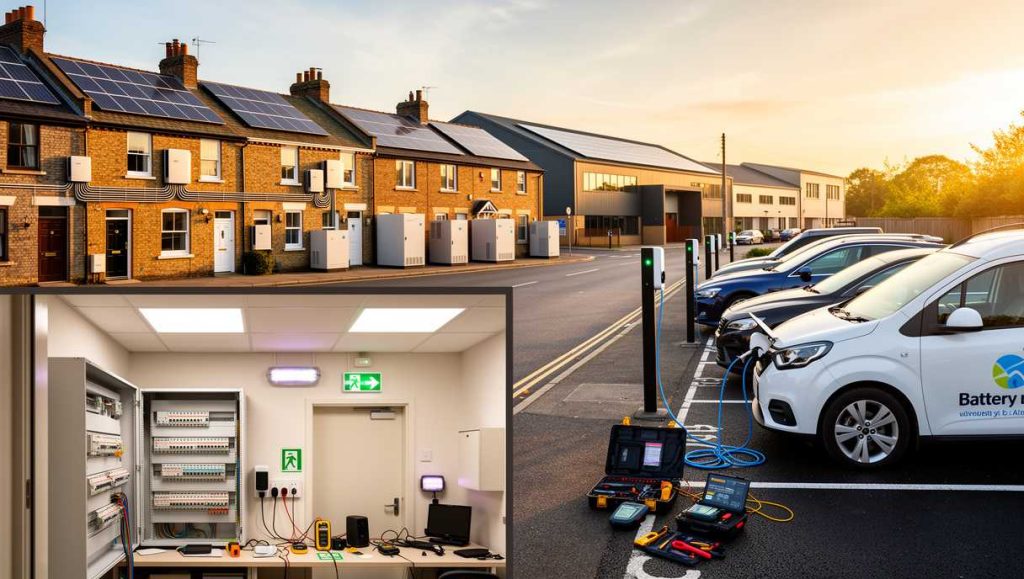
Battery Storage in Bedford: Smarter Energy for Local Homes and Businesses
With energy prices fluctuating and sustainability climbing the agenda, more Bedford households and organisations are turning to battery storage to cut bills, gain resilience and unlock the full value of solar PV. From Victorian terraces in Castle Quarter to business parks on the edge of town, well-specified systems help residents store cheap or self-generated electricity and use it when it matters most. The result is lower costs, reduced carbon and greater control over how and when power is used throughout the day.
Why Battery Storage Makes Sense in Bedford
Bedford’s mix of family homes, schools, shops and light industry makes it a prime location for smart energy solutions. A battery can absorb surplus solar from the late-morning and early-afternoon peak and shift it to the evening, when cooking, heating and device charging typically push usage higher. This simple change increases solar self-consumption and reduces reliance on the grid at peak times, directly lowering bills and easing pressure on local networks serving the town and surrounding villages like Bromham, Kempston and Elstow.
Time-of-use (ToU) and off-peak tariffs available across Bedfordshire further strengthen the case. A controllable battery enables load shifting, charging when rates are low and discharging during expensive windows. Households with electric vehicles, heat pumps or immersion heaters can coordinate these loads with stored energy to smooth out demand spikes. In practice, this means smaller bills and a more predictable monthly spend without compromising comfort or convenience.
Resilience is another local driver. While Bedford enjoys reliable supply overall, storms and faults do occur. Many modern battery systems support essential-load backup, keeping lighting, routers, fridges and key sockets powered during an outage. For home-workers and small businesses in the town centre, Riverside North or industrial estates along the A421 corridor, this capability can keep operations running while neighbours wait for the grid to return. When designed and installed by accredited professionals, Battery Storage in Bedford integrates cleanly with existing consumer units, RCD protection and any on-site solar PV, delivering immediate benefits without disruptive building work.
Sustainability matters locally, too. Bedford Borough Council’s climate goals and the community’s growing interest in renewable energy align with the emissions reductions offered by home and commercial batteries. By capturing and reusing more of each kilowatt-hour generated on-site, properties cut grid imports and associated carbon. Pair batteries with LEDs, smart controls and efficient appliances, and the cumulative savings across neighbourhoods become significant—helping Bedford meet future energy challenges with a more flexible, low-carbon electrical landscape.
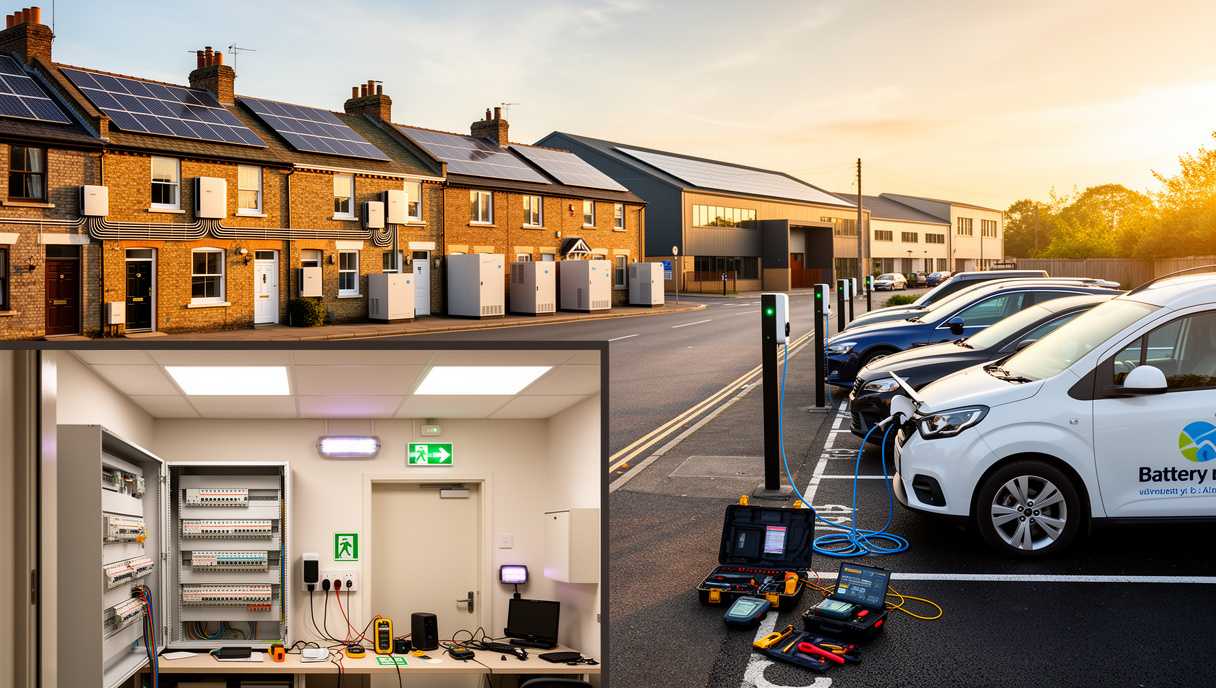
How Battery Systems Work: Sizing, Safety, and Standards
At their core, batteries store electricity as chemical energy and release it through an inverter that matches the grid’s AC waveform. Two common setups are DC-coupled (battery shares a hybrid inverter with solar PV) and AC-coupled (battery uses a dedicated inverter). DC-coupled systems can capture solar energy with fewer conversion steps, while AC-coupled designs are often best for retrofits because they bolt onto existing solar without major changes. Both approaches can be engineered for backup power, whole-home optimisation or simple bill savings.
Right-sizing matters. Capacity is measured in kilowatt-hours (kWh) and determines how much energy you can store; power (kW) dictates how quickly that energy can be delivered. Many Bedford homes do well with 5–10 kWh paired to a 3–5 kW inverter, balancing cost, usable capacity and typical evening demand. Larger properties or small businesses may look at 10–30 kWh, especially if refrigeration, IT hardware or workshop tools need coverage. Round-trip efficiency (often 90%+), cycle life and depth of discharge define long-term value—modern lithium iron phosphate (LFP) chemistries offer robust safety and durability well-suited to domestic and commercial sites.
Safety and compliance are paramount. In the UK, installations must follow wiring regulations (BS 7671), relevant product standards and manufacturer guidelines. Depending on system size and connection type, DNO notification or permission (G98/G99) is typically required before commissioning; in the Bedford area, the process aligns with established procedures to ensure safe parallel operation with the local grid. Proper earthing, surge protection, RCD/RCBO selection and appropriately rated isolation are essential, as is a considered location for the battery—often a utility room, garage or dedicated outbuilding with adequate clearance and ventilation.
Smart features make batteries more effective. App-based controls let you schedule charging for off-peak times, set reserve levels for outages and track cost and carbon savings. Some platforms integrate with EV chargers or smart heaters to automatically shift consumption when the battery is ready, maximising the value of every stored kilowatt-hour. For backup configurations, installers can create a dedicated “essential circuits” board to keep critical loads powered while preventing heavy appliances from overloading the system. With professional design, batteries fit neatly alongside EICR-based maintenance regimes, emergency lighting where applicable and existing energy-efficiency upgrades, ensuring the whole installation remains safe, compliant and future-ready.
Practical Scenarios and Costs in Bedford: Real-World Outcomes
Consider a three-bedroom semi in Brickhill with a 4 kWp solar array. A 7 kWh battery absorbs midday surplus and covers the evening cooking window, TV time and device charging. With occasional off-peak top-ups, the homeowner cuts peak imports and trims annual bills by hundreds of pounds. Over 10 years, avoided costs and improved solar utilisation combine with potential tariff optimisation to deliver a strong return, all while the family enjoys quieter, cleaner comfort and the reassurance of optional essential-load backup.
In Bedford town centre, a small retailer can benefit from a 10–15 kWh system that recharges before opening and covers late-afternoon spikes from lighting, HVAC fans and POS equipment. By smoothing grid demand, the store shields itself from expensive time bands and keeps trade running during short outages. For schools or community venues, 20–40 kWh linked to roof-mounted solar helps match storage to daytime usage and after-school activities, lowering running costs and turning the site into a living example of practical sustainability for pupils and visitors alike.
Costs vary with capacity, backup features and site complexity. As an indicative guide, domestic systems of 5–10 kWh typically land in the region many homeowners expect for major electrical upgrades, with backup functionality and premium brands adding to the figure. Commercial projects scale with larger inverters, distribution modifications and monitoring. Many properties benefit from the UK’s VAT relief on qualifying domestic energy-saving materials, which has included battery installations under recent guidance—helping to improve payback when combined with smart tariffs and the Smart Export Guarantee for any surplus solar exported back to the grid.
Lead times in Bedford are practical: survey and design to confirm capacity, location and protection; DNO notification or approval where needed; and a tidy installation that integrates with consumer units, SPDs and any existing PV or EV chargers. Warranties commonly span 10 years for batteries and inverters, with performance guarantees on usable capacity after a set number of cycles. Routine checks—visual inspections, firmware updates and periodic testing—keep systems running efficiently. When specified by accredited, experienced electricians who understand local building stock and usage patterns, battery storage delivers predictable savings, a smaller carbon footprint and a modern energy experience that suits Bedford’s homes, shops, schools and light industry without disrupting daily life.

A Slovenian biochemist who decamped to Nairobi to run a wildlife DNA lab, Gregor riffs on gene editing, African tech accelerators, and barefoot trail-running biomechanics. He roasts his own coffee over campfires and keeps a GoPro strapped to his field microscope.